
Japan & South Korea: 14-Day Itinerary and eSIM Guide
Plan Tokyo, Kyoto and Seoul in 14 days: a realistic route, transport, useful apps and a clear choice between a regional eSIM and country plans.
In this article
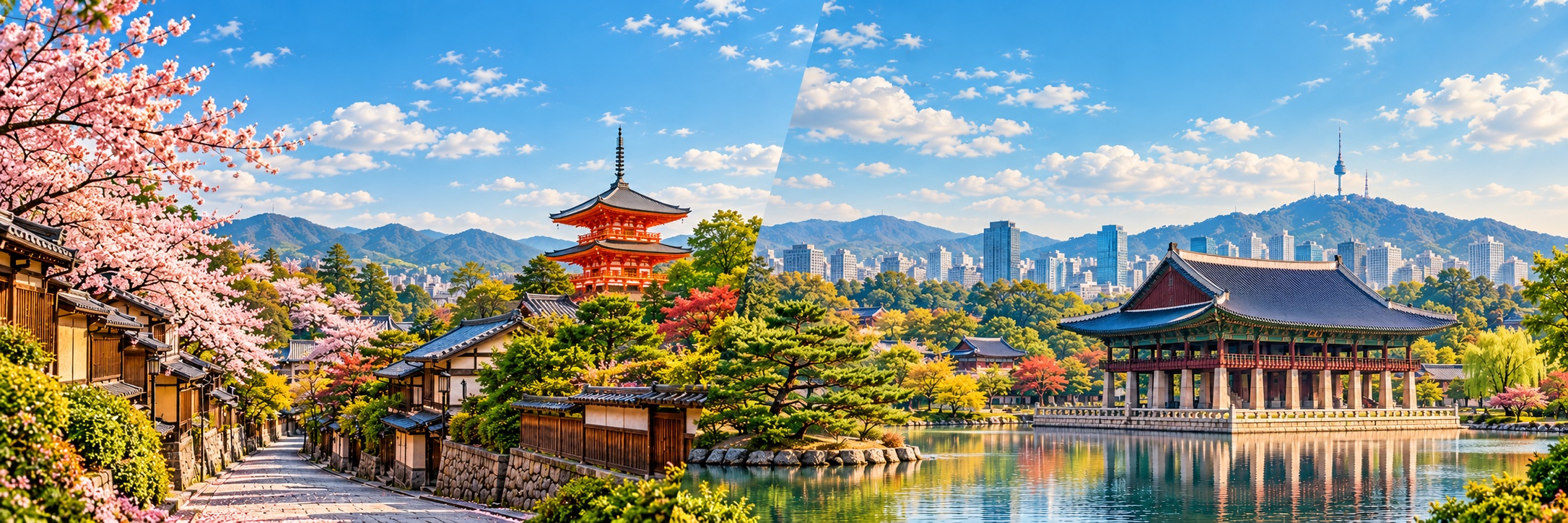
Two countries do not have to mean a different hotel every night. Our suggested 14-day Japan and South Korea itinerary uses three bases: four nights in Tokyo, four in Kyoto and five in Seoul. Osaka fits as a day trip. You get time for neighbourhood walks, food and a slower afternoon, while keeping the international transfer on its own day.
How should you divide 14 days between Japan and South Korea?
Count 14 days on the ground, including arrival and departure; long-haul flights may require additional calendar days. This plan is 13 hotel nights, not 14. Compare a multi-city ticket into Tokyo and home from Seoul against a return ticket before booking hotels. Reverse the route if flights work better. For a ten-day trip, choose Tokyo and Seoul rather than squeezing in every stop.
| Days | Overnight base | Focus |
|---|---|---|
| 1–4 | Tokyo · 4 nights | Arrival, eastern and western neighbourhoods, one flexible day |
| 5–8 | Kyoto · 4 nights | Rail transfer, Kyoto walks, optional Osaka outing |
| 9 | Seoul · first night | Japan–Korea flight and hotel transfer |
| 10–13 | Seoul · 4 more nights | Palace, neighbourhoods, river or an optional day trip |
| 14 | Departure | Airport transfer; no fixed sightseeing appointment |
Days 1–4: Tokyo without crossing the city all day
Make arrival day deliberately light: reach the hotel, eat nearby and learn the closest station exit. Group Asakusa and Ueno on one day; reserve another for Meiji Jingu, Harajuku and Shibuya. Keep day four for a museum, a neighbourhood you enjoyed or bad-weather recovery. A hotel near a useful station can save more energy than a long checklist of attractions. Save the hotel address and last-train route before going out. For a longer Japan stay, use our Japan travel guide.
Days 5–8: Kyoto, with an optional Osaka day trip
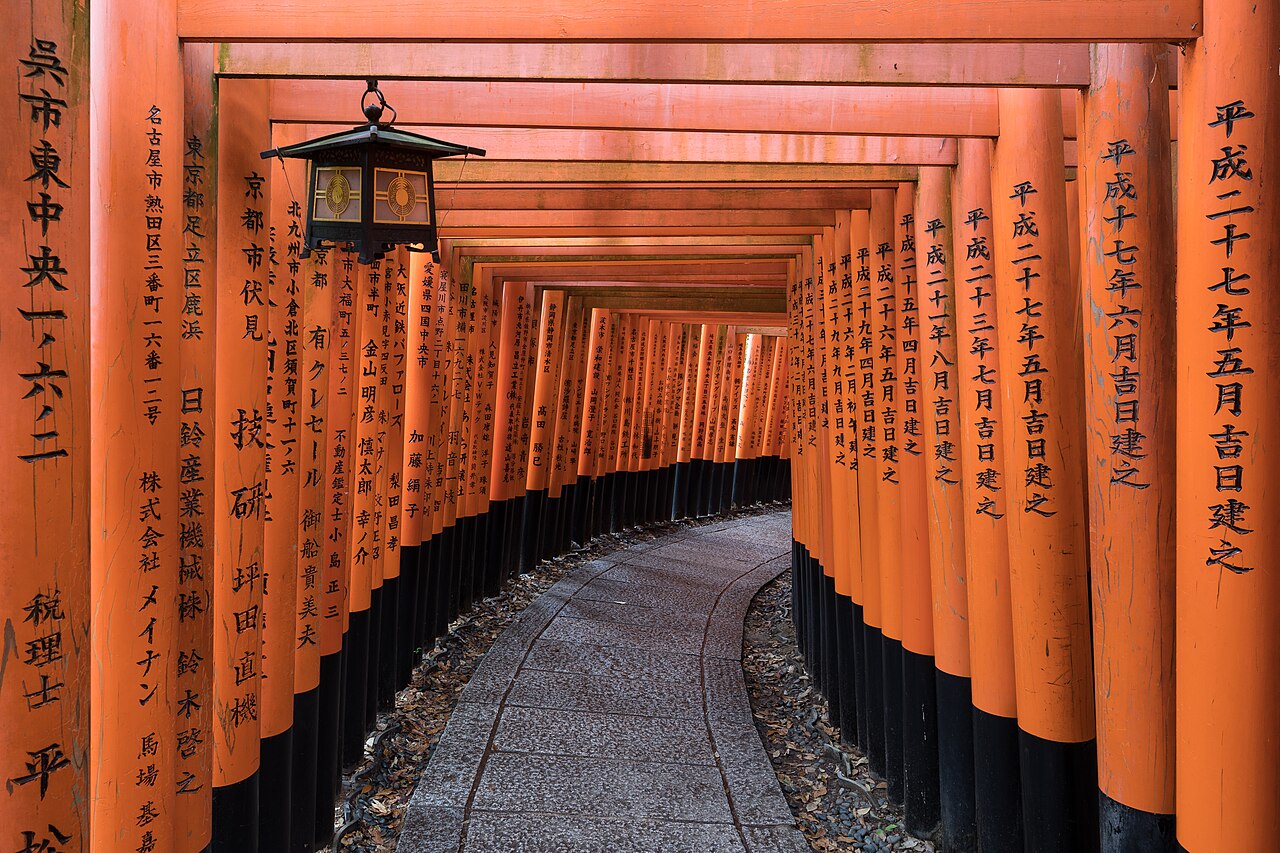
Travel to Kyoto on day five and leave room for check-in and an evening walk. Give eastern Kyoto one day; choose Fushimi Inari or Arashiyama for another, rather than treating opposite sides of the city as one quick stop. Day seven or eight can become an Osaka food-and-neighbourhood outing. Return to the same Kyoto hotel to avoid another luggage move. Keep private lanes and residents' doorways clear, and follow local photography signs. This is a suggested pace, not a booked tour.

Day 9: make Japan–Korea a transfer day
Look for flights from Kansai to the Seoul area for your actual dates. Compare the total with baggage, airport transport and arrival time included. A short flight still consumes much of a day once checkout, check-in and immigration are added. JR-West lists Haruka connections between Kansai Airport, Osaka and Kyoto; Seoul's official guide lists airport rail access. Check the exact terminal and the last onward service before choosing a late arrival. Save bookings offline and leave the first evening flexible.
JR-West · Haruka · Visit Seoul · Airport transport
Days 10–13: Seoul with room to change your mind
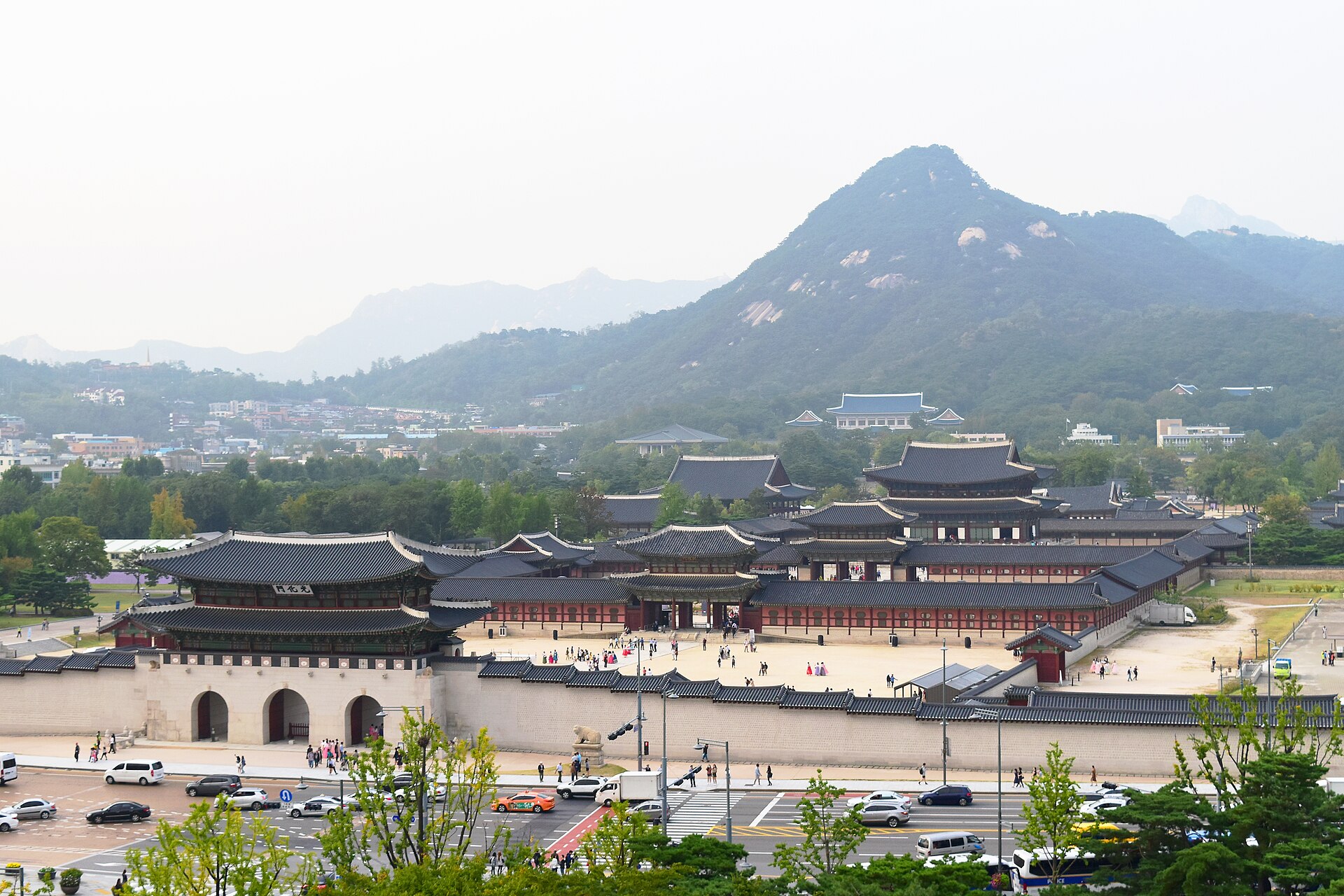
Pair a palace visit with nearby streets and a relaxed meal; use another day for Hongdae or Seongsu instead of racing across town. Leave one day for a museum, the Han River or a pre-planned day trip. Check attraction opening days before assigning dates. On day fourteen, head to the airport with a proper buffer. Busan and Jeju deserve extra nights; add them by extending the holiday or removing another base. Our South Korea travel guide helps you plan a longer Korean section.

When to go, and what belongs in the budget?
Spring and autumn are useful starting points for a walking-focused trip. Blossom and foliage timing varies, so do not book around an assumed peak date. Summer needs heat and rain alternatives; winter needs warm clothing. Build the budget from 13 hotel nights, international flights, the Japan–Korea flight, Tokyo–Kyoto rail, local transport, food, admissions and connectivity. For two people sharing a room, divide the room cost by two, but keep flights and most transport per person. Price the exact rail trips before buying a pass; a pass is not automatically the cheapest option.
Which apps and transport cards should you prepare?
For Japan, save routes in Google Maps or a dedicated rail planner. Suica or ICOCA can simplify eligible local journeys; they are not a substitute for every reserved train ticket. In Korea, prepare NAVER Map or KakaoMap and keep hotel names in Korean; Tmoney is a separate Korean transport card. Download a translation tool and essential booking PDFs before travel. Internet access does not automatically provide a Japanese or Korean phone number, payment account or local identity verification.
One eSIM for Japan and Korea, or two country plans?
Start with the countries listed on the individual product. The Japan and South Korea eSIM catalog brings regional and local options together; not every package on that page covers both destinations. A qualifying Asia plan can keep one eSIM profile for the whole route. Separate Japan eSIM plans and South Korea eSIM plans let you allocate different amounts of data to each stay. Compare total cost, validity, supported networks and activation rules. A seven-day plan cannot cover fourteen days merely because enough data remains.
| Option | Good fit | Check before buying |
|---|---|---|
| Regional Asia eSIM | Both countries on one trip | Japan AND South Korea in the product's coverage; validity for the entire journey |
| Two country eSIMs | Different lengths of stay or data needs | Combined price and which profile to enable in each country |
| Home-network roaming | An existing allowance already covers both | Your exact tariff, fair-use terms and extra charges |
Regional package examples for this route
Observed on 25 October 2026, in EUR: Asia 5 GB / 15 days €6.45; 10 GB / 15 days €10.45; unlimited / 15 days €28.95. These are dated examples, not fixed quotations. Confirm current price, coverage and any speed or fair-use conditions on the product before purchase.
How much data should you plan for two weeks?
Use a personal estimate, not a universal promise: 300 MB per day × 14 = about 4.2 GB; 700 MB × 14 = about 9.8 GB. The first is a lighter planning scenario, the second leaves more room for photos and app use, but either can be exceeded by video. Leave headroom instead of selecting exactly the calculated amount. Download large files on Wi-Fi and turn off automatic cloud photo uploads if you want to control usage. Hotspot use shares the same allowance.
Set up before departure, then check again after landing
Confirm that your exact device variant supports eSIM and is network-unlocked. Install over a reliable connection following the purchased plan's instructions; check when validity starts before enabling it early. Select the travel eSIM for mobile data, disable automatic data switching to your home line, and enable roaming on the travel eSIM if its instructions require it. At the second destination, keep the regional profile or select the correct country profile. If service does not return, check the remaining validity, data line and APN instructions before deleting anything.
Japan and South Korea trip: frequently asked questions
Are two weeks enough for Japan and South Korea?
Yes for a focused first trip: Tokyo, Kyoto and Seoul with 13 hotel nights. It is not enough to see both countries comprehensively. With children or a slower pace, keep only Tokyo and Seoul.
Does a Japan eSIM work in South Korea?
A Japan-only package does not automatically include South Korea. Choose a regional product listing both, or buy a separate Korean plan.
Can I use one eSIM for the entire 14-day trip?
Yes, when both countries are covered and validity lasts through your final travel day. Check when the validity clock starts; installation and activation can have different meanings between products.
Is 10 GB enough for Japan and Korea?
At an assumed 700 MB daily, fourteen days uses about 9.8 GB, leaving almost no margin. Light navigation and messaging may need less; video, uploads and laptop tethering can need much more.
Can I share my eSIMfo connection with family?
Yes. eSIMfo's current plans support hotspot. The receiving devices connect to your phone's Wi-Fi; all usage counts towards the same allowance, and your phone uses more battery.
Will I keep WhatsApp and receive bank SMS?
WhatsApp can keep its existing number while using the travel eSIM's data. Bank SMS to your home number requires that original line to remain available under your carrier's conditions. A data eSIM does not move your home phone number or guarantee verification codes.
Sources and planning notes
- JNTO · Tokyo
- JNTO · Kyoto
- JNTO · Seasons
- VISITKOREA · Climate
- JNTO · Rail and IC cards
- VISITKOREA · Transport cards
- Korea Tourism Organization · Transport apps
Route proposed by eSIMfo; information and package examples checked on 25 October 2026. Cover: AI-generated travel illustration. Interior photographs are credited archive images.