
South Korea eSIM & Travel Guide 2026: Seoul, Busan & Jeju
Plan South Korea with Seoul, Busan and optional Jeju. Find a realistic itinerary, useful travel apps and eSIM data packages for maps and messages.

In this article
South Korea rewards a trip built around neighbourhoods rather than a long checklist. Give Seoul time for palaces, markets and cafés, then let Busan change the pace with coastal walks and hillside streets. Mobile data makes those days easier, but choosing an eSIM is only one part of the preparation. Here is how to connect the route, transport and phone setup.
Gamcheon, Busan — archive photograph, 2024. Basile Morin · CC BY-SA 4.0

Where should you go on a first South Korea trip?
For about a week, Seoul and Busan provide two contrasting bases without a domestic flight. Choose accommodation near a useful transport connection, then group attractions by area. Jeju is an additional island journey, not a quick side trip from a Seoul hotel; it deserves dedicated nights and a plan for getting around.
| Base | What it adds | Planning choice |
|---|---|---|
| Seoul | Palaces, neighbourhoods, markets and cafés | Group visits geographically and check opening days. |
| Busan | Coast, old-city streets and Gamcheon | Allow travel time between different coastal areas. |
| Gyeongju | A historical change of pace | Add nights or replace another stop. |
| Jeju | Island landscapes and beach areas | Plan flights, transfers and transport separately. |

How can you plan 7 or 10 days in South Korea?
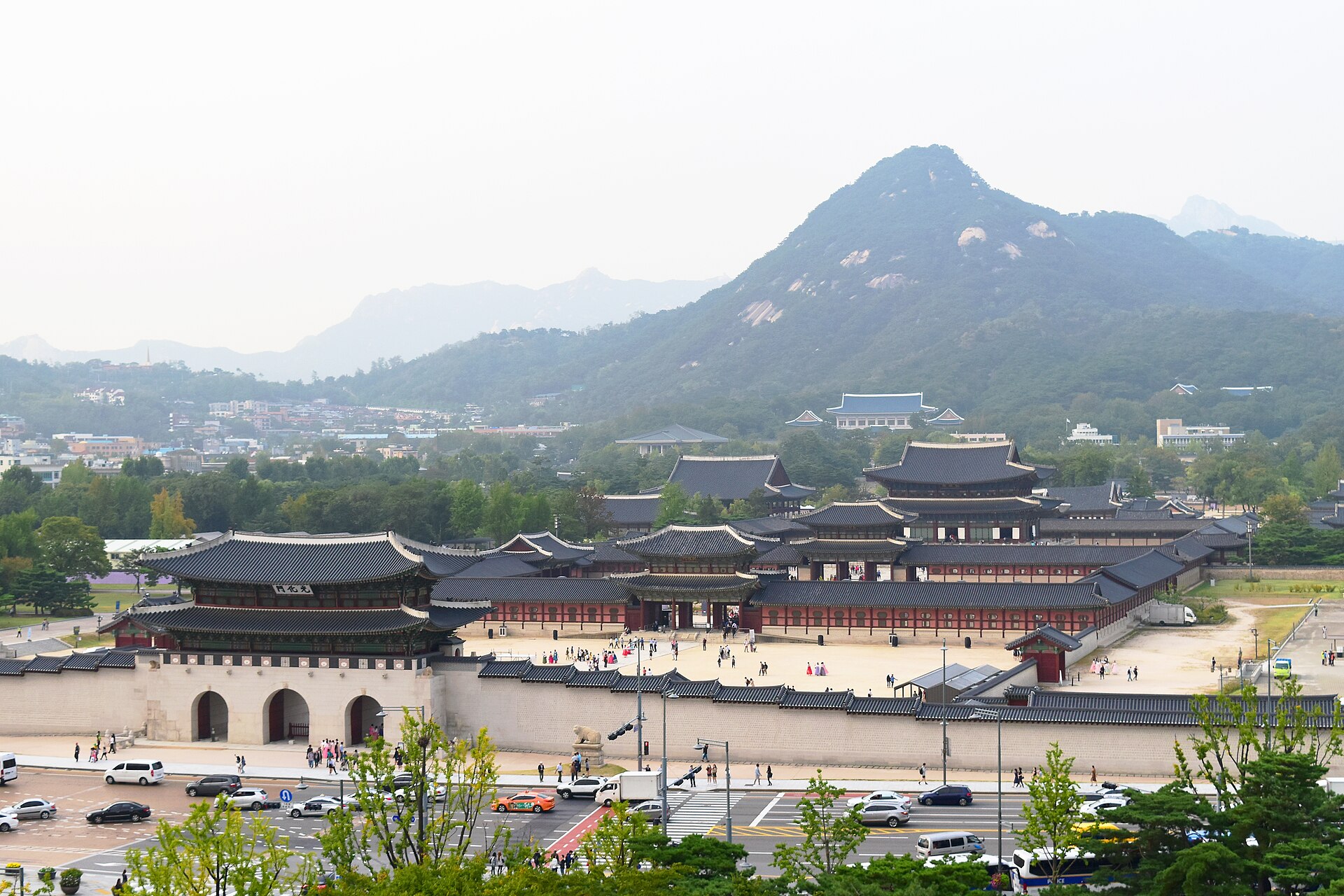
A workable seven-day outline is four days based in Seoul, two in Busan and one day allocated to transfers and departure arrangements. In Seoul, combine a palace visit with nearby streets rather than crossing the city several times a day. Check the chosen palace’s opening day before reserving other activities. Leave time for markets, cafés and a neighbourhood you can explore on foot.
In Busan, do not assume all coastal sights are close together. Group the Gamcheon and old-city area into one outing, and a different coastal area into another. Gamcheon is a lived-in hillside neighbourhood: keep voices down near homes, stay on visitor routes and avoid blocking residents for photographs.
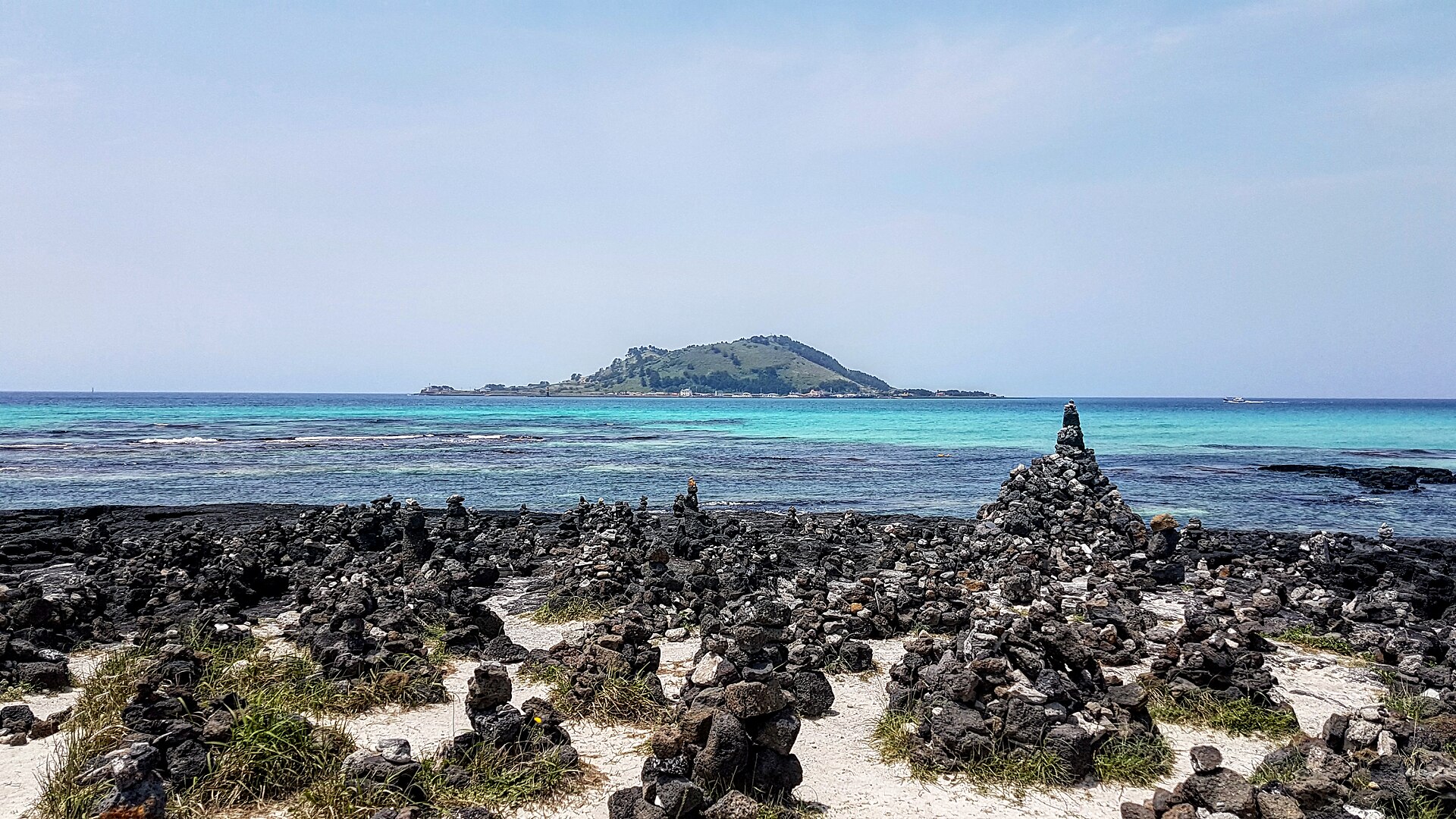
With ten days, consider adding Gyeongju for a different historical stop or allowing several nights for Jeju. Choose one addition instead of trying to do everything. For Jeju, budget time for the flight, airport transfers and local transport; a beach such as Hyeopjae is a destination to plan around, not a promise of swimming weather. These are suggested itineraries, not fixed tours.

Which transport and apps should you prepare?
Before landing, save your hotel’s address in Korean as well as your own language. Install and test Naver Map or KakaoMap for local route planning, and a translation app such as Papago. Keep a screenshot of your first airport-to-hotel journey so your arrival does not depend on immediately finding a signal.
For intercity travel, compare the actual train departure and arrival stations, not just the city names. Check KTX availability for your dates before fixing hotel changes. For local travel, review the transport-card options described by Visit Korea, including Tmoney; a local transit card is not the same thing as a seat reservation on an intercity train.
Check the airport terminal and the train or bus that fits your arrival time and luggage. Allow time for immigration and a late arrival before choosing a tight connection. Carry a payment backup and confirm accepted payment methods for the transport product you choose.
Visit Korea · Transport cards · Korea Transportation Guide
South Korea eSIM, local SIM or pocket Wi-Fi?
A travel eSIM is convenient when you want independent data for maps and messages. A pocket Wi-Fi unit can work for a group staying together, but it is another device to charge and return. Decide whether you need ordinary local calls or simply an internet connection; they are different products.
| Option | When it can work well | What to check |
|---|---|---|
| Travel eSIM | Independent data on a compatible phone | Device support, validity and hotspot rules. |
| Local SIM with voice | You need a Korean calling service | Exact number features and registration requirements. |
| Pocket Wi-Fi | A group moves together | Battery, sharing range, pickup and return. |
| Existing roaming | Your home plan already covers the trip | South Korea inclusion, daily charges and data limit. |
Some Korean booking or delivery services require a domestic number or identity verification. Internet access alone does not satisfy that requirement. If a particular app is essential, check its sign-up method before buying a data-only plan. Keep a direct hotel contact as an alternative. Reception still varies by building, terrain and device.
How much data do you need, and what do plans cost?
The eSIMfo South Korea page lists SK for the packages checked here. These examples are data plans; a Korean number, ordinary voice/SMS and identity-verification eligibility should not be assumed. Sample EUR prices were checked on 16 September 2026. Confirm the current offer, validity and hotspot conditions before purchase.
A planning example of 300 MB daily for seven days is about 2.1 GB. Add a margin for uploads or hotspot use. Frequent video calls, streaming and cloud backups can consume much more. Download large files on Wi-Fi and choose validity that covers your entire stay, including arrival and departure.
| Data | Validity | Price checked |
|---|---|---|
| 1 GB | 7 days | €3.40 |
| 5 GB | 30 days | €9.25 |
| 10 GB | 30 days | €14.35 |
Compare current South Korea eSIM packages
How do you prepare your eSIM before departure?
Check the exact phone model supports eSIM and is unlocked for other networks. Install using a reliable internet connection and follow the package’s activation instructions; installation and the start of validity are not always the same event.
On arrival, select the travel eSIM for mobile data. Apply the roaming setting required by its instructions, while keeping data roaming off on your home line if you want to avoid home-network data charges. Turn off automatic mobile-data switching. Keep your original number for existing messaging accounts; ordinary calls or SMS on that line remain subject to your operator’s terms.
Test a map and a message before leaving the airport or hotel. If there is no data, check the selected data line, roaming/APN instructions and remaining validity. Do not delete the eSIM as a first troubleshooting step: reinstallation rules vary.
eSIM activation guide · Compatible devices (English)
South Korea travel and eSIM questions
What is the best eSIM for South Korea?
Match the package to your phone, trip length, data needs and any hotspot requirement. Also check whether you need a local number; a data-only package is not a substitute for every voice or verification service.
Will a data eSIM give me a Korean phone number?
Do not assume it does. The data-plan examples here are for internet access. Check a specific product’s number, calling and registration features if those are required.
Which map app should I prepare for Korea?
Naver Map or KakaoMap are useful options for local route planning. Save hotel addresses in Korean and test the app before departure; you can keep other map apps as additional references.
Can I use a South Korea eSIM on Jeju?
A country plan is sold for South Korea, but actual service depends on the supported network in each location. Check coverage for your itinerary and keep remote-area maps offline.
Is 3 GB enough for a week?
It can fit a light-use plan around the example of 2.1 GB over seven days, with some headroom. It may not cover regular streaming, long video calls or heavy hotspot sharing.
Information and sample package prices checked on 16 September 2026. Independent eSIMfo travel guide. Photos are credited archive images, not a live view of conditions.