
China, Hong Kong & Macau eSIM: 2026 Travel Guide
Plan Hong Kong, Shenzhen and Macau with one regional eSIM. Compare coverage, current data prices, border-day setup and practical routes for a 3–7 day trip.

In this article
Hong Kong’s harbour, Shenzhen’s skyline and Macau’s tiled squares can fit into one memorable trip. What does not automatically travel with you is a single-destination mobile plan. A Hong Kong eSIM may stop working when you cross into mainland China or Macau, even though the next stop is close by.
One eSIM can cover all three when the selected plan explicitly lists them. The eSIMfo Asia package checked for this guide includes mainland China, Hong Kong and Macao. Below, compare it with separate plans, build a realistic route and prepare your phone before the first border crossing.
Updated 11 October 2026. Prices are a dated EUR snapshot, not a locked quote. Cover: AI-assisted editorial illustration. Routes and data budgets are planning examples; this guide does not claim an on-site network test.
First choose your route: three, five or seven days
| Time available | Suggested route | What to prioritise |
|---|---|---|
| 3 full days | Hong Kong + a Macau day trip | Two days around Hong Kong; one Macau outing if transport fits |
| 5 full days | Hong Kong + Shenzhen + Macau | Two Hong Kong days, two Shenzhen days and one Macau day |
| 7 full days | Hong Kong + Shenzhen + Macau | Add an overnight in Macau and a flexible transfer or rest day |
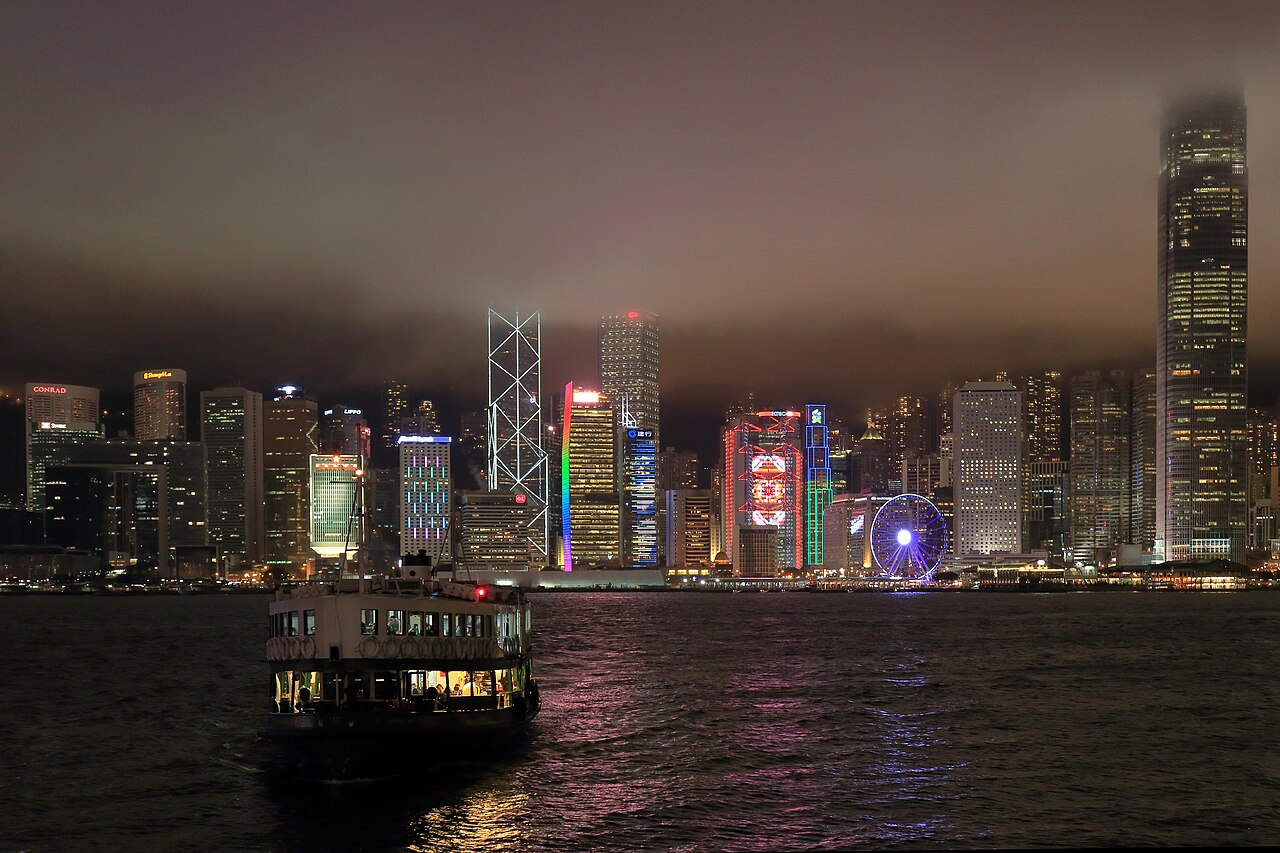
In Hong Kong, group Central and the harbour together instead of repeatedly crossing the city. A Star Ferry ride and a Kowloon food walk make a good first day. Our Hong Kong travel guide covers the neighbourhood choices in more detail.
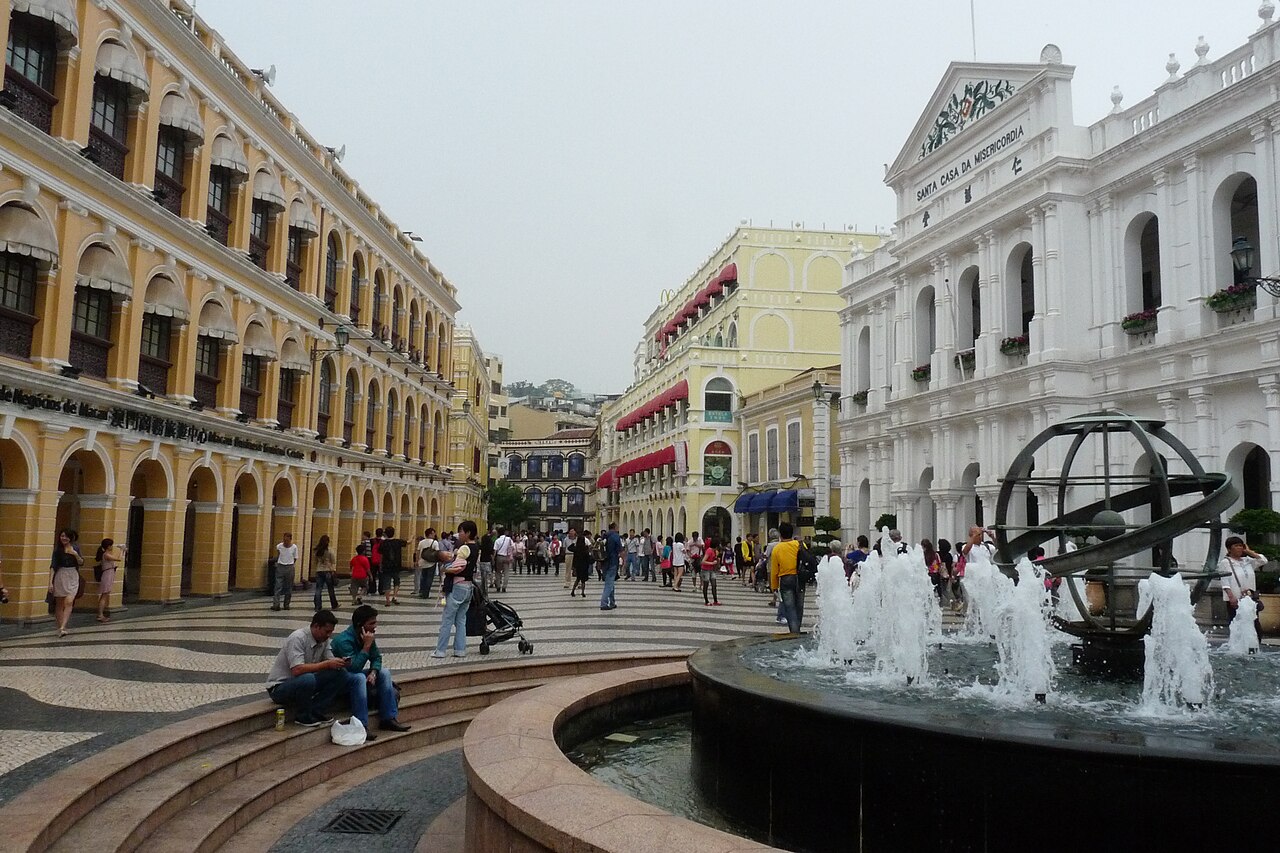
For Shenzhen, choose a base near the station you actually use: Futian and Shenzhen North are different stations. A neighbourhood meal and time around the civic centre can be more enjoyable than rushing between distant attractions. In Macau, combine Senado Square and the historic centre, then give Taipa its own block of time if you stay overnight. These are itinerary ideas, not a fixed tour; arrival and departure days need extra room.

Hong Kong to Shenzhen and Macau: plan the transfer, not just the ride
Cross-border rail serves mainland destinations from Hong Kong West Kowloon. Check the correct destination station, bring the document used for booking and allow for immigration and security. MTR’s departure guide explains the process. A short train journey does not mean you should arrive just before departure.
For Macau, compare ferry terminals with the Hong Kong–Zhuhai–Macao Bridge route. A bridge shuttle connects border ports; your onward city transfer is a separate part of the journey. Use the Macao tourism office’s transport guide for current options. Save your final hotel address, not only the terminal name.
Check entry permission separately for each crossing and your passport. A ticket or eSIM is not entry permission. If returning to the mainland, check whether your document allows that additional entry. Download bookings and addresses before travelling, but use the official live app if a service requires a dynamic boarding code.

Which eSIM covers mainland China, Hong Kong and Macau?
Treat them as three separate coverage checks. Geographic proximity and a plan name are not enough: open the covered-destinations list for the actual package.
| Connection option | When it makes sense | Main check |
|---|---|---|
| Hong Kong-only plan | Staying entirely in Hong Kong | Do not assume Shenzhen or Macau is included |
| Separate local plans | Different allowances or a local-number requirement | Switching, validity and total price for each stop |
| Asia regional eSIM | A trip crossing all three areas | All three listed, sufficient days and shared data allowance |
| Home-carrier roaming | Your existing allowance already covers the route | Each destination, daily fees and fair-use limits |
The checked eSIMfo Asia 5 GB/7-day package lists China Unicom and China Mobile with 5G, China Telecom with 4G, HKT in Hong Kong with 5G and CTM in Macao with 5G. These are listed network options, not a guarantee of indoor reception or a particular speed. Coverage, device support, congestion and your exact location still matter.
What do the regional packages cost?
The following standard-data options were displayed on 11 October 2026. They share an allowance across covered destinations; the GB total does not renew at every border.
| Asia package | Validity | Displayed price | Practical starting point |
|---|---|---|---|
| 1 GB | 7 days | €2.95 | Light use with reliable Wi-Fi |
| 5 GB | 7 days | €6.20 | Maps, messaging and a moderate sightseeing week |
| 10 GB | 15 days | €10.45 | A longer route or more media use |
The checked 5 GB package is data-only and lists hotspot and top-up support. The regional page says activation begins on connection to a supported network. Check the selected package’s current terms before installing early. See current Asia packages and coverage; unlimited options have their own conditions and should not be assumed identical to standard plans.
Will Google and WhatsApp work in mainland China?
Network access and app access are different questions. Mainland internet restrictions can affect services you normally use; the UK travel guidance specifically lists Google and several social platforms. A working cellular signal does not prove that every app can connect.
An international roaming eSIM can use a different data route from a mainland domestic SIM or hotel Wi-Fi. However, neither the word “eSIM” nor a 5G badge proves where traffic exits. eSIMfo’s product page advertises messaging and navigation apps, but this guide has no route-specific WhatsApp/Google test to turn that into a guarantee. If an app is essential for work, obtain confirmation for the exact package before purchase and test it on mobile data after arrival. Keep a second agreed contact method, hotel details and offline maps ready.
Prepare WeChat or Alipay account setup before departure if you plan to use them. Internet data does not supply a mainland phone number, complete identity checks or guarantee that a bank or payment app accepts your account.
How much data should you budget?
Use your recent phone usage as the starting point. 500 MB/day × 5 days ≈ 2.5 GB; a 5 GB plan gives room above that example. 1 GB/day × 7 days ≈ 7 GB; compare 10 GB options. These are arithmetic examples, not measured app-consumption promises. Video, cloud backups and laptop hotspot use can change the result quickly.
Download large files on Wi-Fi, pause automatic photo uploads and check usage after day one. For a couple sharing one hotspot, count both people’s consumption and remember the second phone loses internet when separated from the hotspot.
A practical checklist before each border crossing
- Check eSIM support for your exact device and sales-region variant, plus carrier-unlock status. Apple’s travel eSIM guidance explains why regional models matter.
- Install using reliable Wi-Fi and save the package instructions. Label the line “Asia trip” so it is easy to select.
- Select the travel eSIM for mobile data. Apply its roaming/APN instructions; disable home-line data roaming and automatic data switching to avoid unintended home-line data use.
- Keep the original line available if you need SMS on that number, subject to your carrier’s roaming and charges. A new data eSIM does not receive codes sent to the old number.
- After crossing, allow the phone to register on a supported network. If needed, toggle flight mode, check the selected line and follow the supplied network settings. Do not delete the eSIM as the first troubleshooting step.
- Keep a charged power bank, addresses in local writing and your support/order details accessible offline. Cellular coverage is not continuous throughout every tunnel or ferry journey.
China, Hong Kong and Macau eSIM questions
Can one eSIM work in Hong Kong, Shenzhen and Macau?
Yes, if all three coverage areas are included. The eSIMfo Asia package checked here lists China, Hong Kong and Macao. Shenzhen is in mainland China. A Hong Kong-only plan is not enough unless its coverage explicitly says otherwise.
Which eSIM has the best network coverage in Hong Kong?
There is no universal winner for every location. The checked Asia package lists HKT with 5G in Hong Kong. Compare the listed network with the places you will visit; a 5G listing is not a promise of the fastest service everywhere.
Do I need a VPN in China if I have an eSIM?
An eSIM alone does not answer that. App access depends on the package’s routing and current restrictions. Verify essential apps for the exact product, prepare offline alternatives and follow local rules; do not assume a VPN or eSIM guarantees access.
Does a China eSIM include Macau?
Not automatically. Look for Macao or Macau in the package’s covered-destinations list. The Asia regional package reviewed here includes it, while a mainland-only package may not.
Is 5 GB enough for a week across the three areas?
It can be suitable for moderate use, but check your habits. At 500 MB a day, seven days use about 3.5 GB. Frequent video, uploads or a shared hotspot can exceed 5 GB; compare a larger allowance if those are central to your trip.
Does the regional eSIM provide a local phone number or SMS?
The checked 5 GB/7-day plan is data-only. It does not provide +86, +852 or +853 mobile numbers or ordinary SMS. Internet messaging apps and SMS verification on your existing number are separate matters.
Can I use the eSIM as a hotspot?
The checked standard 5 GB package lists hotspot support. Connected devices use the same allowance. Check the specific product again if choosing an unlimited or different package.
Should I reinstall the eSIM when crossing the border?
Normally no: a suitable regional profile can remain installed across covered destinations. Check coverage, data selection, roaming settings and network registration first. Reinstall only when support or the package instructions explicitly require it.
Choose the route first, then match all destinations, days and data to it. Compare Asia regional eSIM options and use our Hong Kong guide for the city part of the trip.