
Switzerland eSIM & Travel Guide 2026: Cities, Lakes & Trains
Plan a Swiss trip through Zurich, Lucerne and Interlaken. Compare Switzerland eSIM plans, rail options, data needs, coverage and setup before you travel.
In this article
A good Swiss holiday leaves time for the journey: a lakeside walk in Lucerne, a train window above turquoise water, an afternoon that changes with the mountain weather. Start with a manageable route, then sort out tickets and internet. This guide combines a practical first-trip itinerary with Switzerland eSIM choices, so maps, train updates and family messages are ready when you need them.
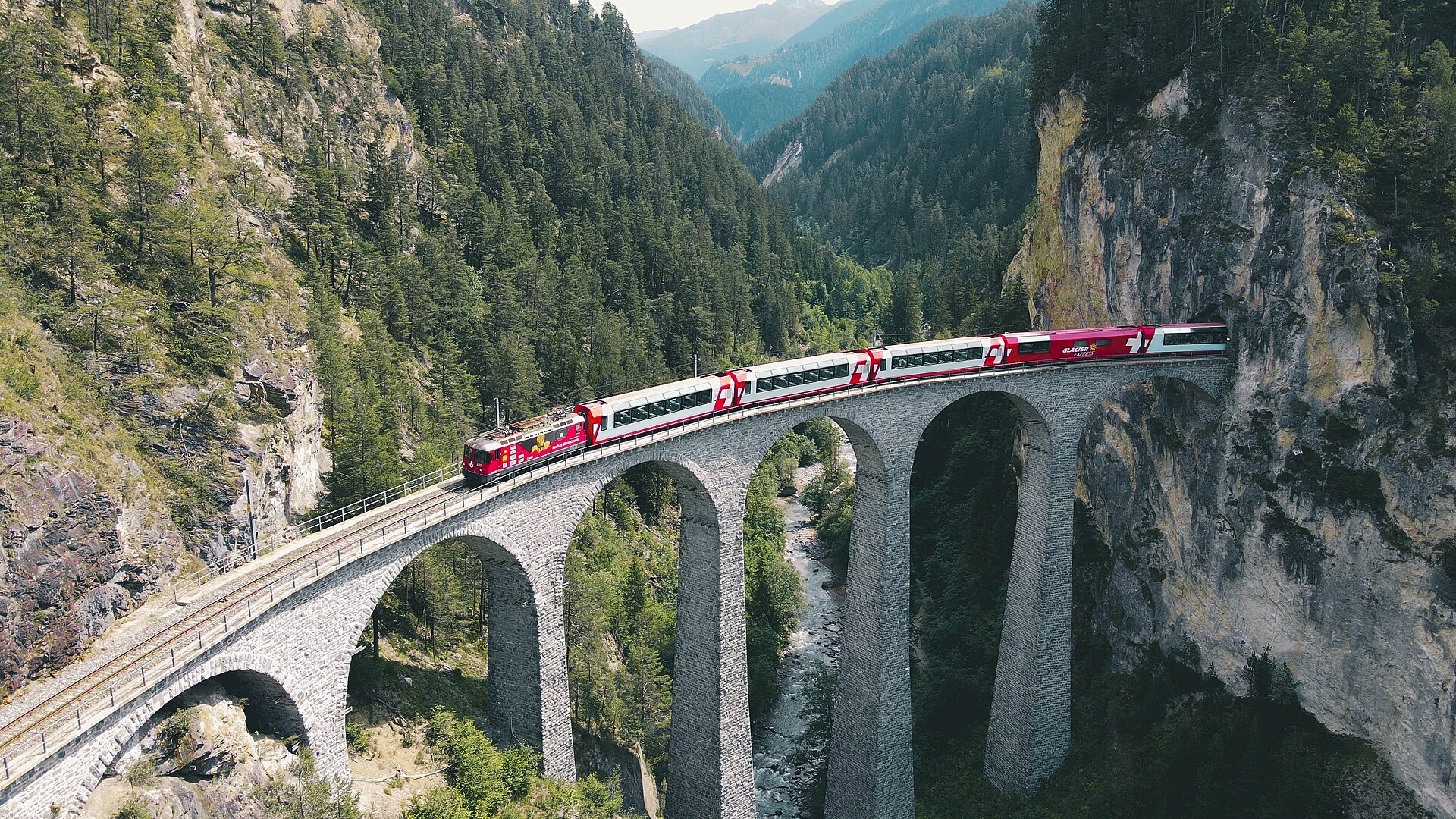
Cover: a train on the Landwasser Viaduct in Graubünden, photographed in 2020. Luca Gerber · CC BY-SA 4.0

Where should you go on a first trip to Switzerland?
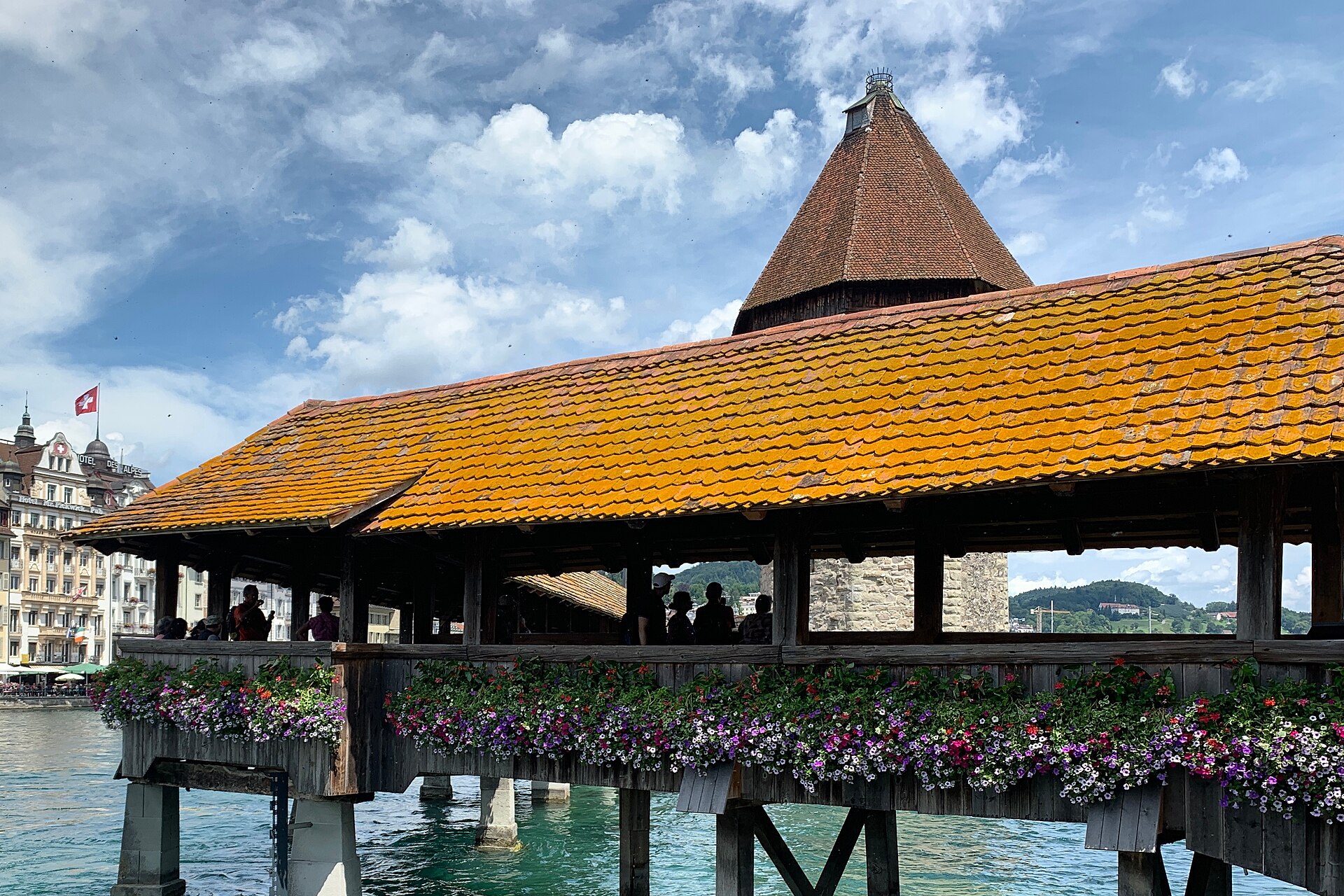
For four to seven days, build around Zurich, Lucerne and Interlaken instead of trying to see the entire country. Zurich suits an arrival-day stroll by the river and lake. Lucerne brings the old town, Chapel Bridge and waterfront close together. Interlaken is a useful base for choosing between lakeside villages and the valleys of the Bernese Oberland.
Our suggested seven-day rhythm is one night in Zurich, two in Lucerne and three around Interlaken, followed by your departure day. Move a night toward your arrival or departure airport if that makes the journey easier. For four days, choose just two bases: packing and checking in every morning quickly eats into sightseeing.
| Base | Make time for | Practical choice |
|---|---|---|
| Zurich | Old town, river and lakeside walks | Keep the arrival day light |
| Lucerne | Chapel Bridge, lake and a weather-dependent mountain outing | Stay two nights if you want flexibility |
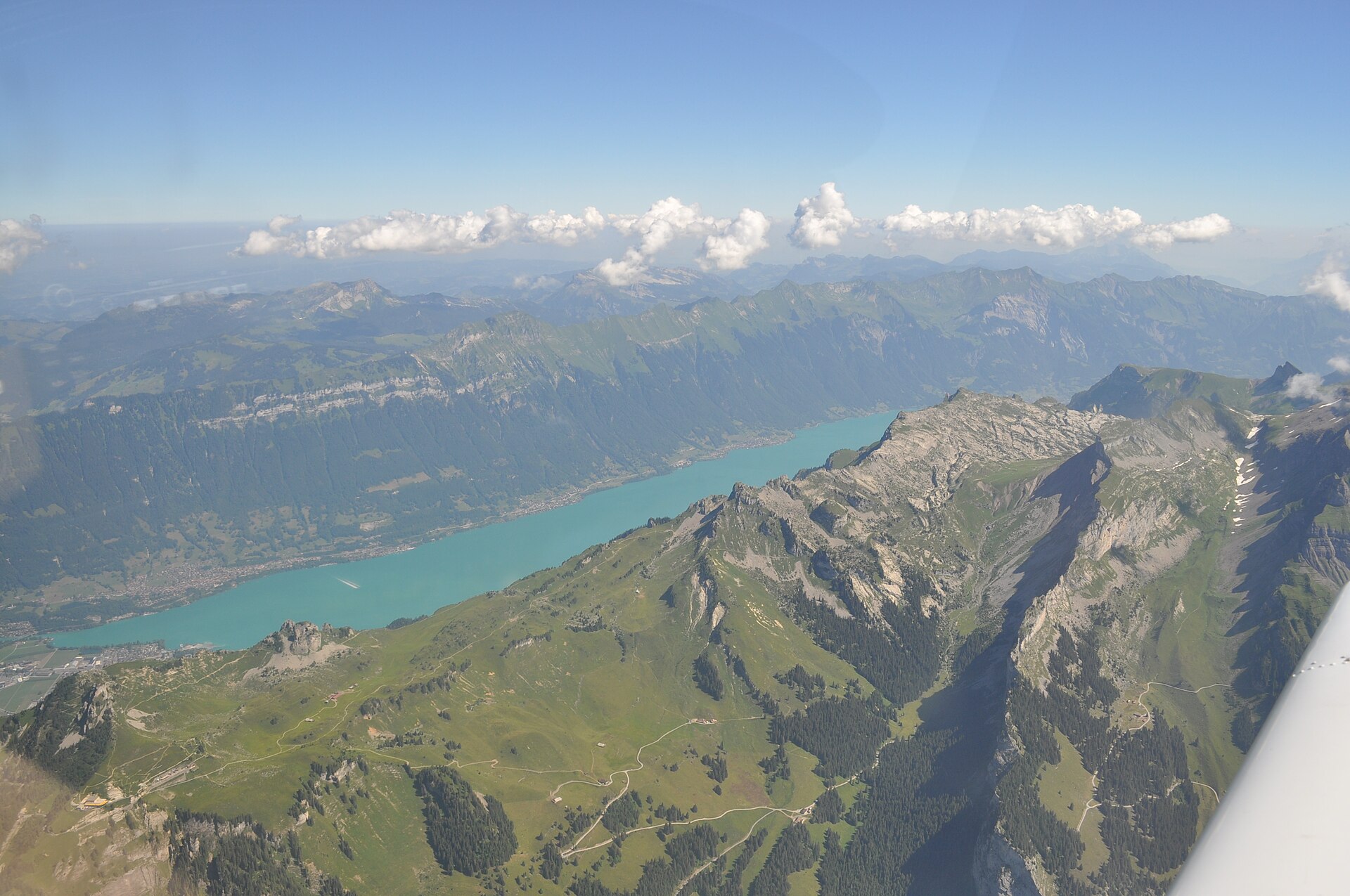
| Interlaken area | Lake Brienz, Lake Thun and a valley day | Choose one main outing each day |
With more than a week, add a separate region rather than a long out-and-back day trip. Graubünden suits railway enthusiasts; the Landwasser Viaduct in the cover photo belongs to that eastern extension, not the Zurich–Lucerne–Interlaken route. Geneva and Montreux offer a western alternative for a different trip.

How do you plan trains, tickets and a sensible budget?
Compare the journeys you will actually take before buying a rail pass. Add up intercity trips, local transport and the mountain excursions you want, then compare them with the pass's exact coverage. A pass that works well for daily travel may be unnecessary for several quiet days in one place. Accommodation near a useful station can also save repeated transfers.
Check the SBB timetable for your travel date, including engineering works and the final connection back. A valid train ticket and a seat reservation are different things. Certain panoramic services require a separate reservation or supplement; check the named train rather than assuming that a pass includes everything.
Download tickets where the issuing app allows it, save your accommodation address and bring a power bank. Use mobile data for live platform changes, not as the only place you store essential details. A simple budget has four lines: accommodation, transport, meals and paid excursions. Choose the mountain day first; it can matter more to the budget than small everyday purchases.
When should you visit, and what if the weather changes?
Choose the season for the activities you want. Summer suits lake days and many mountain outings; autumn adds colour to city parks, forests and scenic train journeys. A pleasant temperature in Zurich does not tell you what conditions will be like at a high viewpoint. Check the forecast for the actual destination, plus the lift or railway's operating calendar.
Keep one flexible day near your mountain base. Put a clear-weather outing there when the forecast looks promising; use a wet afternoon for a museum, café or old-town walk. Pack layers and footwear appropriate to the route, and pick walks that match everyone's ability. A city-and-lake itinerary is still a complete holiday if a summit trip is not suitable.
Travelling in winter changes the plan: allow for shorter daylight and choose activities with confirmed seasonal access. In shoulder seasons, maintenance closures can affect mountain transport. Check operating dates before booking around one particular attraction.

Switzerland eSIM, roaming or a local SIM: which fits your trip?
First check whether Switzerland is explicitly included in your home operator's roaming allowance and at what cost. A plan labelled Europe is not enough detail. If suitable data is already included, you may not need another package. Otherwise, a travel eSIM is a convenient option for an unlocked, compatible phone, especially when you want internet ready on arrival.
| Option | Useful when | Check before choosing |
|---|---|---|
| Travel eSIM | You mainly need maps, messages and online tickets | Phone compatibility, data, validity and covered countries |
| Home SIM roaming | Your existing allowance includes Switzerland | Switzerland-specific limits and any extra fees |
| Local SIM or local plan | You need features such as a local number | Identification, activation, voice services and plan terms |
The eSIMfo Switzerland plans checked for this guide use Sunrise. Coverage depends on the location, terrain, device and local network conditions; a city connection does not guarantee uninterrupted service in tunnels or on remote mountain paths. Download maps before an outing. For a trip that also visits Austria, France, Germany or Italy, check every country in the selected package: a Switzerland-only plan covers Switzerland.
Which eSIMfo Switzerland packages and data allowance should you compare?
These data-only examples were checked on 20 September 2026 with the store currency set to EUR. They provide mobile internet, not a Swiss voice/SMS number. Prices and available plans may change; the linked country page shows current offers.
| Data | Validity | Price checked |
|---|---|---|
| 1 GB | 7 days | €1.70 |
| 3 GB | 30 days | €2.50 |
| 5 GB | 30 days | €3.45 |
Start with your own phone's recent data usage. For example, a planning allowance of 300 MB a day over seven days is about 2.1 GB: a 3 GB package leaves some room above that estimate. This is an arithmetic example, not a promise of what a particular mix of apps will consume. Video calls, streaming, cloud photo backups and laptop sharing can change the total substantially.
For a short visit with offline maps and limited uploads, compare the smaller package with your estimate. For a week with frequent photo sharing, compare 3 GB and 5 GB, then leave a buffer. Turn off automatic app updates over mobile data and check usage during the trip. The 1 GB product inspected also lists hotspot and top-up support; confirm these features on the exact package you choose.
Compare current Switzerland eSIM plans
How do you install your eSIM before the trip?
Check the exact phone model and regional version for eSIM support, and make sure it is carrier-unlocked. Save the purchase instructions, then install the profile over reliable Wi-Fi before departure. Give it a clear name such as Switzerland so you can distinguish it from your home line.
eSIMfo's Switzerland instructions recommend installation before departure and activation on arrival. Follow the instructions supplied with your particular package and check when its validity starts. Once in Switzerland, select the travel eSIM for mobile data and enable data roaming on that eSIM if instructed. Keep data roaming off on the home line if you want to avoid its data charges, and disable automatic mobile-data switching.
Keeping your home line enabled for calls or verification texts is a separate choice; its operator's roaming charges still apply. WhatsApp and other already-set-up messaging apps can use the travel data connection. If connection fails, check the selected data line, remaining allowance and package instructions before changing APN settings or deleting the profile.
eSIM installation and activation guide · Check compatible devices (English)
Switzerland eSIM: practical questions before you travel
Which eSIM should I choose for Switzerland?
Match the package to your trip length, estimated data usage and countries visited. The eSIMfo examples here use Sunrise and cover Switzerland. Check phone compatibility and your existing roaming allowance before buying; a regional package needs an explicit country list.
Does a data-only Switzerland eSIM include a phone number?
The data-only packages listed here provide internet without a Swiss voice/SMS number. You can use already-configured WhatsApp and similar apps over data. Ordinary calls and SMS on your home SIM follow your home operator's terms.
When should I install and activate my Switzerland eSIM?
Install the profile over Wi-Fi before departure, then follow the package instructions for activation on arrival. Installation and the start of validity are not interchangeable; check the rule shown for your chosen plan before enabling it.
How can I check whether my phone supports a Swiss travel eSIM?
Check the exact model and purchase region against the compatibility list, and confirm that the phone is carrier-unlocked. A model family name alone is not enough because regional versions can differ.
Will the eSIM work on Swiss trains and in the mountains?
The checked eSIMfo packages use Sunrise, but signal varies by route, terrain and device. Tunnels and remote areas can interrupt service. Save maps and tickets offline, and consult the network's coverage information for your destination.
Editorial and package check: 20 September 2026. Route suggestions are for planning; confirm transport operations and current package terms before travelling. Photo dates and credits appear alongside the images.