
Europe EES System: 2026 Border Crossing Guide
The EES era in Europe has begun. All about biometric data, digital records, and the end of passport stamps.
In this article
The new border system directly affecting millions of people traveling to Europe is now fully active. The Entry/Exit System (EES), developed by the European Union, started to be implemented at full capacity at all Schengen area borders as of April 10, 2026. The system, which has been in the testing and transition process for a long time, is now officially in force. With this development, border crossings in Europe have undergone a fundamental change.
With the new system:
- The era of passport stamps has ended
- All entry-exit processes have become digitalized
- Biometric data has become mandatory
The EES system covers non-EU travelers traveling to Europe for short-term stays (within the scope of the 90-day rule).
Notable Development in the First Days: Long Queues
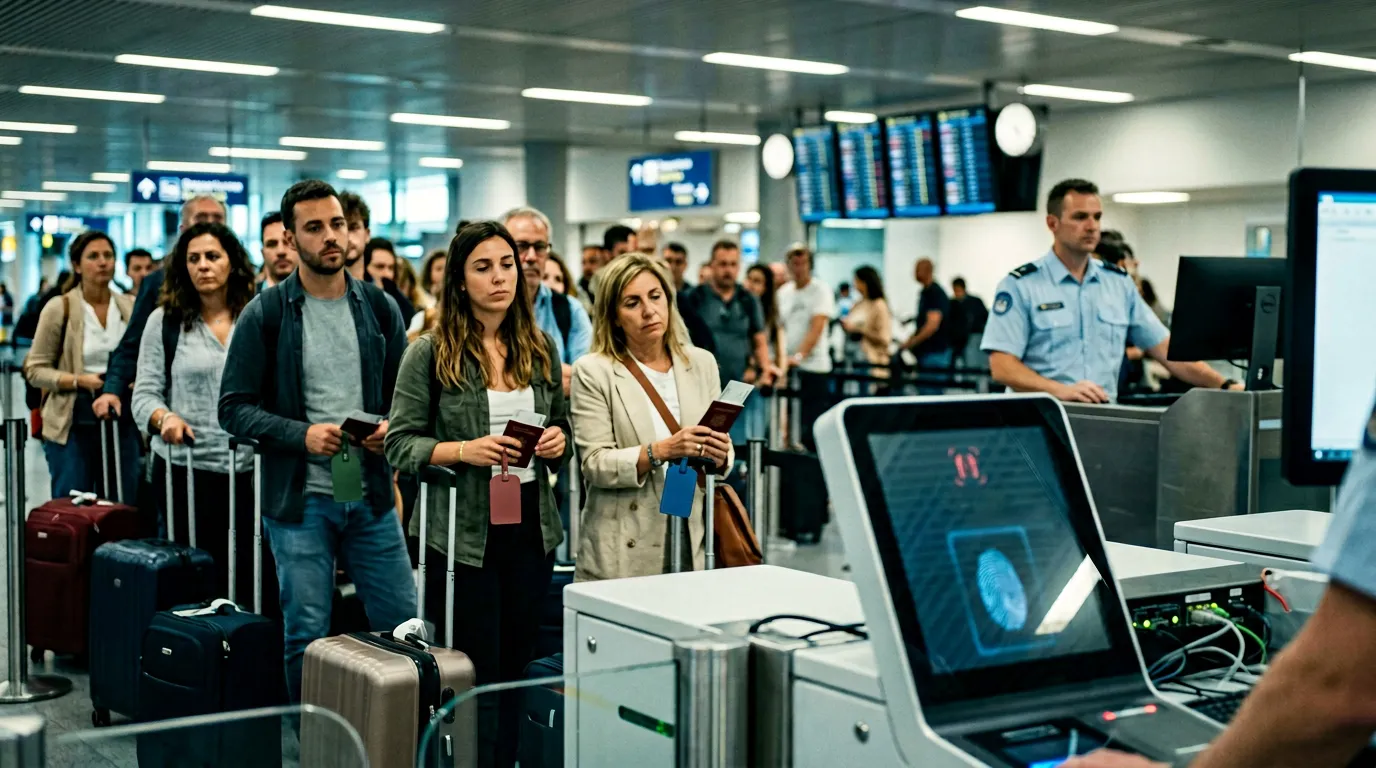
With the implementation of the system, congestion occurred at many airports across Europe. In the first days, 2-3 hour waiting times, intense border controls, and slow-moving processes at kiosk devices were reported. Especially the time-consuming process of collecting biometric data caused the queues to lengthen.
What is EES?
EES (Entry/Exit System) is a border control system that digitally records the information of passengers entering and exiting Europe. This system automatically records passport information, entry-exit dates, fingerprints, and facial data.
Additionally, the system:
- Automatically calculates the 90-day stay period
- Instantly detects duration violations
- Increases border security
Passport Stamps Are Now Gone
One of the biggest changes with EES is the removal of passport stamps. All information is now kept in the digital system. This means faster data access, fewer errors, and more organized recording.
How to Use EES?
This is the most important part of the new system because everyone will experience this process from now on.
1. Arrival at the Airport
When you reach Europe, you follow the orientation signs before going to the normal passport control. Now, most airports have “EES / Self Service” or “Kiosk” areas.
2. Entering the Kiosk Device
If you are entering for the first time, you scan your passport at the device, and the system reads your information.
3. Providing Biometric Data
This stage is the most critical part: fingerprints are taken, and a facial photo is captured. This data is recorded in the system and is usually stored for 3 years.
4. Answering Basic Questions
At some points, the system may ask you: Where will you stay? How many days will you stay? What is your purpose of travel?
5. Border Control Approval
After all processes are completed, the border official checks the data, and entry approval is given.
6. Future Travels Are Easier
After the first registration, you do not need to give fingerprints again; the system recognizes you, and the processes become much faster.
Who Does EES Cover?
The EES system covers non-European Union citizens, those arriving as tourists, and short-term visitors for up to 90 days. EU citizens, those with residence permits, and long-term visa holders are excluded.
Disadvantages and Challenges
- ❗ Long Waiting Times on First Entry: The first registration process takes time.
- ❗ Congestion Problem: Especially during holiday seasons, serious congestion can occur at major airports.
- ❗ Adaptation to Technology: Kiosk use can be challenging for elderly passengers.
Things to Consider When Traveling with EES
- ⏰ Go to the Airport Early: Be there at least 3 hours in advance.
- 📄 Keep Your Documents Ready: Have your hotel reservation and return ticket with you.
- 📱 Have Internet on Your Phone: Internet is vital for following directions and showing reservations.
At eSIMfo, we eliminate the internet problem during your travels to Europe. To stay connected as soon as you step off the plane without dealing with physical SIM cards, check out our Europe eSIM packages. Meet your digital needs during the EES process without interruption by making an instant installation with a QR code.
CONCLUSION: A New Era in Travel to Europe Has Begun
As of April 10, 2026, border crossings in Europe have become completely digitalized with the EES system. In this new era, more security and digital processes await passengers. It is possible to go through this process smoothly with the right preparation and a continuous internet connection.
Final Word: In the world of the future, borders are becoming digital. Don't stay without internet on your journey and pass through the EES process with ease.