
Cross-Border Road Trip Connectivity Guide
Discover how to maintain a stable mobile internet connection during international driving trips across borders.
In this article
How to Stay Connected During Road Trips Across Borders
Cross-border road trips feel different from every other type of travel. Airports move people quickly from one place to another with controlled infrastructure and predictable connectivity. Trains follow established corridors where mobile networks usually understand the traffic patterns. Road trips operate with complete freedom. Travelers move through highways, villages, mountains, coastlines, deserts, forests, tunnels, and border crossings at their own pace, often changing routes spontaneously along the way. That freedom creates one major challenge. Staying online becomes far less predictable once the road stretches across multiple countries.
One hour your navigation works flawlessly while streaming music and syncing photos automatically. Two hours later your phone suddenly disconnects after crossing a border, your map freezes somewhere in the middle of a rural highway, and your passengers begin asking whether anyone downloaded directions before the signal disappeared. Experienced road trippers know this situation very well. Modern travelers rely heavily on connectivity while driving internationally. Maps, hotel bookings, fuel station searches, emergency communication, cloud systems, messaging apps, translation tools, digital payments, and remote work all depend on stable mobile internet access. Road travel no longer feels disconnected from digital life.
That shift explains why eSIM technology became one of the most useful tools for international road trips in recent years. Travelers now manage mobile connectivity across borders much more smoothly than before, without constantly replacing physical SIM cards at every country transition. Still, technology alone does not solve everything. Cross-border road travel creates unique connectivity problems that many travelers underestimate before departure. Understanding how mobile networks behave across changing landscapes, roaming environments, and remote driving routes makes a huge difference once the trip begins.
Why Cross-Border Road Trips Create Connectivity Problems
Road travel moves unpredictably compared to other transportation systems. Flights operate between major airports with dense infrastructure. High-speed rail usually follows supported transportation corridors. Cars travel almost anywhere. That flexibility introduces constant network variation. A single driving day may include major cities, isolated highways, mountain roads, border checkpoints, tunnels, forests, rural villages, and remote gas stations separated by enormous distances. Mobile coverage changes constantly across these environments. Many travelers assume strong connectivity automatically follows major highways everywhere. Reality depends heavily on regional infrastructure quality, geography, carrier agreements, and population density. Some routes maintain excellent coverage for hundreds of kilometers. Others experience sudden dead zones surprisingly close to urban areas.
Why eSIM Changed International Road Travel
Traditional SIM cards create unnecessary friction during multi-country driving trips. Imagine driving through several countries during one extended route. Every border crossing creates another connectivity decision. Travelers either continue using expensive roaming services or search for local SIM cards repeatedly. That process becomes exhausting quickly. Finding mobile shops during road trips is not always convenient. Border regions sometimes offer limited services. Rural crossings may lack reliable carrier stores entirely. Small SIM cards are also incredibly easy to lose while unpacking luggage inside moving vehicles or roadside stops. Nobody wants to search for a tiny plastic SIM card on the floor of a rental car at midnight during rain near an unfamiliar border crossing. eSIM eliminates most of this frustration. Travelers install digital profiles directly on compatible devices before departure and switch networks through software instead of physical SIM replacement. That flexibility changes the entire road trip experience.
Why Navigation Matters More Than Ever
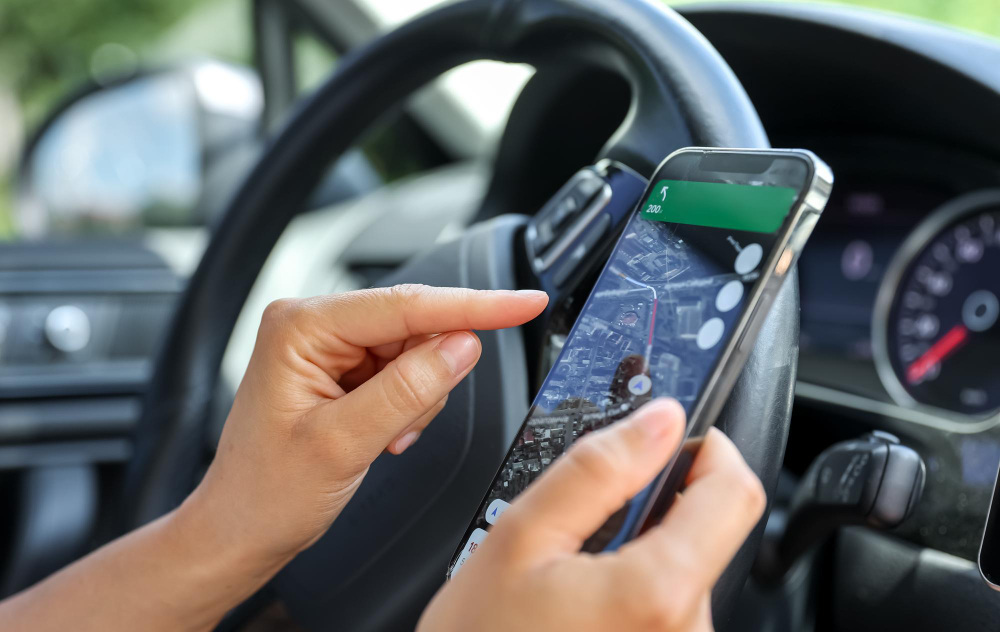
Years ago travelers depended heavily on printed maps and road signs during international driving. Today nearly every road trip depends on digital navigation. Drivers rely on live traffic updates, rerouting suggestions, speed notifications, fuel station searches, weather alerts, parking availability, and accommodation directions constantly throughout the trip. Losing connectivity now affects far more than entertainment. Without stable mobile access, even simple route adjustments become stressful in unfamiliar regions. This makes offline preparation extremely important during international driving trips. Experienced travelers download regional maps before departure instead of assuming mobile data will remain stable continuously across every highway and border area.
Border Crossings Create Strange Network Behavior
Crossing borders by car often produces confusing mobile behavior. Phones may connect temporarily to neighboring towers before officially entering another country. Devices sometimes switch between networks repeatedly near border zones, especially in mountainous areas where signals overlap unpredictably. Travelers occasionally receive roaming notifications before physically reaching border checkpoints. This confuses many people during road trips. Some phones reconnect smoothly after entering a new country. Others require manual network refreshes or brief airplane mode resets before mobile data resumes normally. eSIM helps simplify these transitions significantly because regional connectivity profiles often support broader multi-country coverage without requiring physical SIM replacement.
Why Rural Roads Behave Differently
Many international road trips intentionally avoid major highways. Travelers choose scenic routes through countryside regions, coastal roads, mountains, forests, and small towns where the scenery feels more memorable than crowded urban traffic. These routes often provide weaker connectivity. Mobile infrastructure usually prioritizes populated areas and heavily traveled transportation corridors first. Remote roads naturally receive less coverage support depending on geography and local demand. That does not mean travelers lose internet entirely. It simply means preparation matters more. Offline maps, saved hotel details, downloaded playlists, and locally stored travel documents reduce stress enormously whenever the signal weakens unexpectedly.
Why Battery Drain Increases During Road Trips
Phones work harder during international road travel. Devices continuously search for stronger towers while moving through changing coverage environments. Border transitions, rural highways, tunnels, and mountain roads all force phones to reconnect repeatedly across different networks. This process consumes additional battery power. Many travelers notice unusually fast battery drain during long driving days without understanding why. Navigation apps increase the problem even further because GPS systems remain active constantly while the screen stays illuminated for hours. Car chargers become absolutely essential during cross-border road trips. Portable battery packs also provide useful backup support whenever charging ports become unavailable temporarily.
Tunnels Create Instant Connectivity Loss
Road tunnels interrupt mobile signals aggressively, especially in mountainous regions. Modern highways across Europe, Asia, and South America frequently include long tunnel systems where cellular coverage disappears completely for several minutes. Travelers relying heavily on live navigation sometimes panic during these moments unnecessarily. Most modern navigation systems continue operating briefly using cached map data and GPS positioning even without active internet. Still, downloading offline maps beforehand creates much smoother experiences during extended tunnel regions. Prepared travelers barely notice temporary connectivity loss. Unprepared travelers immediately begin questioning whether their phone stopped working entirely.
Why Public WiFi Is Not Reliable During Road Trips
Road travelers often assume cafés, fuel stations, hotels, and restaurants will solve connectivity problems along the route. Sometimes they help. Sometimes the WiFi barely functions at all. Road trip infrastructure varies enormously depending on region, tourism levels, and local development. Some roadside stops provide excellent internet access while others struggle heavily with overcrowded networks or limited bandwidth. Depending entirely on public WiFi creates unnecessary uncertainty. Mobile data through eSIM usually provides more consistent day-to-day connectivity during road travel than constantly searching for public hotspots.
Why Remote Workers Love Road Travel
Remote work culture changed road trips completely. Many digital professionals now travel internationally by car while continuing full-time online work. Some move between countries for months while balancing remote meetings, content production, cloud collaboration, and client communication directly from hotels, cafés, and temporary accommodations along the route. This lifestyle depends heavily on stable connectivity. Video calls, cloud uploads, messaging platforms, and shared work systems all require reliable mobile internet access. Road travelers working remotely prepare differently from casual tourists because interruptions directly affect productivity.
Why Data Usage Increases Faster Than Expected
International road trips generate enormous data consumption. Navigation apps refresh constantly. Streaming music plays for hours. Passengers upload photos continuously. Cloud backups synchronize automatically in the background. Video platforms consume additional bandwidth during hotel stops. Many travelers underestimate how quickly mobile data disappears during long driving days. Managing settings carefully helps enormously. Disable unnecessary background uploads. Pause automatic cloud syncing temporarily. Download playlists offline before departure. Save entertainment locally whenever possible. eSIM often provides easier visibility into usage tracking through device settings, helping travelers monitor consumption more carefully during long trips.
Real Scenario: Driving Across Europe
Imagine a traveler driving across several European countries during one extended road trip. The route includes major cities, mountain highways, rural villages, coastal roads, and multiple border crossings within a single week. Without preparation, connectivity becomes frustrating quickly. Traditional SIM cards require repeated replacement. Roaming costs become unpredictable. Navigation interruptions create stress in unfamiliar regions. Public WiFi quality varies dramatically between stops. Now imagine the same trip using eSIM configured before departure. Regional profiles support multiple countries digitally. Connectivity transitions happen more smoothly across borders. Offline maps support navigation during tunnels and remote areas. The road trip feels dramatically easier.
Why Weather Affects Road Connectivity
Weather influences mobile performance more than many drivers realize. Heavy storms, snow, dense rain, strong wind conditions, and extreme temperatures occasionally affect infrastructure stability along remote roads and mountainous regions. Coastal highways also experience signal variation during severe weather conditions. Travelers should prepare realistically instead of assuming constant high-speed connectivity throughout every stage of the trip. Downloaded travel information becomes extremely valuable whenever weather temporarily affects network performance.
Why Passengers Expect Constant Internet Now
Road trip culture changed significantly during recent years. Passengers stream movies, scroll social media, upload travel content, join calls, answer emails, and manage digital tasks continuously during long drives. The car itself became a moving digital environment. Connectivity expectations now extend far beyond simple navigation alone. This creates additional pressure on mobile networks, especially during holiday travel periods where thousands of tourists follow identical road routes simultaneously.
Why eSIM Helps Families During Road Trips
Family road trips create unique connectivity challenges. Several people often need simultaneous internet access for navigation, entertainment, communication, and travel coordination. Children stream content in the back seat while adults manage directions and accommodation details in front. Traditional SIM management becomes inconvenient quickly under these conditions. eSIM allows travelers to maintain more flexible mobile setups across compatible devices without constantly swapping physical cards during the trip. This becomes especially useful for families crossing multiple countries within one driving schedule.
Why Border Areas Sometimes Feel Confusing
Border regions create strange connectivity behavior because networks overlap geographically. A phone may repeatedly connect between carriers from neighboring countries while driving near border zones. This sometimes causes temporary instability or unexpected roaming notifications before officially entering another country. Experienced travelers understand this behavior is normal. Most devices stabilize automatically once farther inside the destination country. Still, manually selecting preferred networks occasionally helps reduce unnecessary switching behavior during border driving.
Why Roadside Accommodation Connectivity Varies So Much
International road trips often involve spontaneous overnight stops in unfamiliar towns or rural regions. Connectivity quality inside roadside hotels varies dramatically. Some accommodations provide excellent WiFi and strong mobile coverage. Others barely support stable browsing speeds depending on infrastructure limitations and regional network quality. This unpredictability explains why mobile connectivity preparation matters so much during road travel. Travelers cannot assume every stop provides reliable internet automatically.
Why Security Matters More During Road Trips
People become less cautious with digital security during long road trips because the environment feels informal and relaxed. That creates unnecessary risk. Public WiFi networks inside roadside restaurants, fuel stations, motels, cafés, and parking areas should always be treated carefully. Using mobile data through eSIM often provides safer connectivity compared to relying entirely on unknown public networks. Basic digital awareness remains important throughout international travel:
- Use strong passwords
- Enable authentication features
- Keep devices updated
- Avoid unknown hotspots for sensitive tasks
- Lock devices properly
Road trips should feel adventurous, not careless.
Why Device Compatibility Matters
Modern travel depends heavily on smartphone quality. An outdated device with weak battery health or limited international network support performs noticeably worse during cross-border driving trips. Travelers should confirm several details before departure:
- Does the phone support eSIM?
- Is the device carrier unlocked?
- Are software updates installed?
- Does the battery remain reliable during long navigation sessions?
These small technical checks prevent major frustration later.
Scenic Roads Usually Mean Weaker Signal
One important reality applies almost everywhere. The most beautiful roads often provide the weakest connectivity. Mountain passes, desert highways, coastal cliffs, forest routes, and remote countryside roads rarely maintain nonstop high-speed mobile coverage throughout the entire route. Travelers should expect occasional signal interruptions in these environments. Preparation matters more than unrealistic expectations. Sometimes disconnecting briefly becomes part of the road trip itself.
Why Preparation Changes Everything
Experienced road travelers prepare before problems happen. Their maps already work offline. Hotel details remain stored locally. Entertainment downloads finish before entering remote regions. Charging equipment stays ready inside the vehicle. This preparation dramatically reduces stress whenever connectivity changes unexpectedly. Unprepared travelers feel frustrated constantly. Prepared travelers adapt calmly because temporary signal loss no longer disrupts the entire trip.
Why Cross-Border Road Travel Keeps Growing
International road trips continue growing because travelers increasingly prefer flexibility over rigid schedules. Driving allows spontaneous stops, hidden destinations, scenic detours, and slower travel experiences that flights and trains cannot always provide. Connectivity expectations rise alongside this trend. People want freedom without disconnecting entirely from digital life. That balance explains why eSIM adoption continues expanding rapidly among international travelers.
Final Thoughts
Cross-border road trips create some of the most rewarding travel experiences people can have, but they also introduce unique connectivity challenges many travelers underestimate before departure. Highways, border zones, tunnels, mountains, rural roads, coastal routes, and remote regions all affect mobile networks differently throughout the trip. Modern travelers depend heavily on internet access for navigation, communication, bookings, remote work, entertainment, and safety while driving internationally. eSIM helps simplify much of this experience by reducing physical SIM management, supporting smoother regional connectivity, and improving flexibility across multiple countries. Still, preparation remains the most important advantage travelers can have. Offline maps, downloaded documents, portable chargers, realistic expectations, and smart device management all help create smoother international road trips regardless of destination. The signal may disappear temporarily somewhere between borders, mountains, or endless highways. At least now you know how to stay ready for it.